




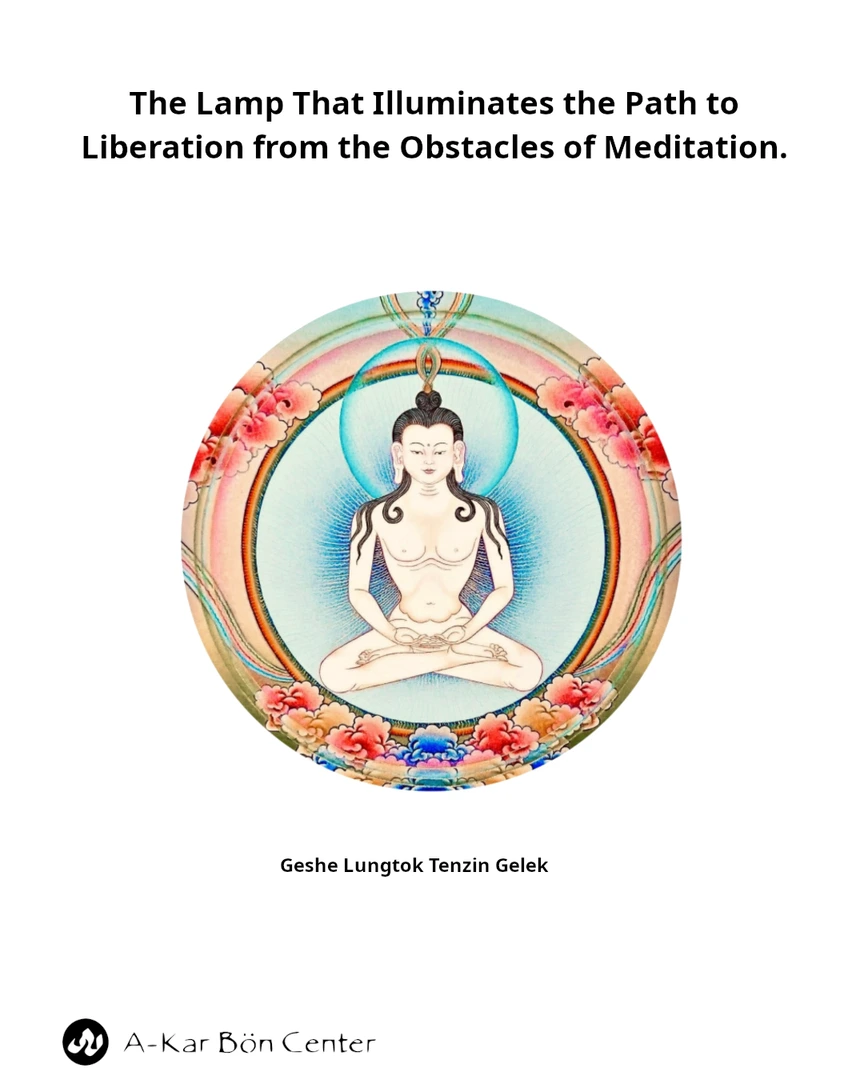

The Lamp That Illuminates the Path to Liberation from the Obstacles of Meditation
Dear Student,
It is wonderful that you are dedicating serious time to your meditation practice. Experiencing periods where practice does not feel stable or aligned is a very common and natural stage of the journey.
To address your question on how to find genuine stability and strike the vital point of practice, it is crucial for beginners to clearly understand how to meditate before sitting down on the cushion.
When this foundational understanding is lacking, practitioners easily fall into two common errors based on their varying capacities. Below is a guide on how to recognize these errors and cultivate the proper remedies.
Part I — The Two Common Errors of Beginners
1. The First Error
Wandering into Delusion Due to Losing the Intensity of Natural Mindfulness
This error occurs when beginner practitioners fail to understand the vital point of the unaltered natural state and develop a mistaken understanding of meditation practice.
They believe that intentionally maintaining mindfulness during meditation inevitably becomes fabricated and conceptual. As a result, they conclude that mindfulness itself is unnecessary. They then leave the mind in an excessively loose, careless state of indifference, attempting to think of nothing at all.
The Pitfall
By leaving the mind in this way, the inherent intensity of natural mindfulness — the very clarity of awareness itself — is lost.
Consequently:
- The mind falls under dullness and sluggishness
- Clarity disappears
- Meditation dissolves without being recognized
- One wanders blindly in confusion and delusion
2. The Second Error
Obscuring the State by Forcefully Holding Mindfulness
Other beginner practitioners move to the opposite extreme.
Overemphasizing scriptural warnings about losing mindfulness, they become anxious that their minds will fall into ordinary distraction and conceptual thought. Out of fear, they forcefully grip mindfulness during meditation.
The Pitfall
Because mindfulness is held so tightly:
- Mindfulness itself becomes another conceptual thought
- Meditation becomes rigid and artificial
- The natural state is obscured
- Effort itself becomes an obstacle
Rather than revealing reality, this excessive control blocks realization of the mind’s true and unaltered nature.
Part II — The Three Direct Remedies for Correct Practice
To free yourself from these two errors and properly sustain meditation practice, the following three essential points should become the heart of your practice.
1. Maintaining the Balanced Middle Way of Relaxation and Tension
The structure of meditation should neither be:
- Too tight and rigid
- Nor too loose and careless
Instead, one must maintain a balanced middle way.
This is like tuning the strings of a lute:
- Too tight and they break
- Too loose and they produce no sound
Remedy for Looseness
Maintain alertness and introspective awareness, like a vigilant watchman.
Rather than sinking into blankness or dullness:
- The mind should remain clear
- Awareness should stay vivid and present
- Meditation should remain awake and luminous
Remedy for Tightness
Do not grip awareness forcefully.
Instead:
- Relax body and mind completely
- Do not struggle to suppress thoughts
- If thoughts arise, simply do not follow them
- Allow them to naturally settle in their own place
2. Relying on Unaltered Natural Mindfulness
To prevent mindfulness from becoming conceptual and effortful, one must rely on natural mindfulness rather than fabricated mindfulness.
Fabricated Mindfulness
This is the anxious attitude of:
“I am meditating now; I must stop all thoughts.”
Because it contains grasping and expectation, it becomes an obstacle.
Natural Mindfulness
Natural mindfulness simply allows the mind to rest within its own nature without adding anything artificial.
Like gently observing the natural movement of breathing:
- Awareness remains simple
- Knowing remains clear
- No force or anxiety is added
One rests naturally within simple knowing itself.
3. Uniting Clarity and Stability
To strike the true vital point of meditation, clarity and stability must be united inseparably.
Stability (gnas pa)
Stability means:
- The mind does not chase after thoughts or external objects
- Awareness rests naturally without movement
- The mind remains settled and undisturbed
This remedies excessive tightness.
Clarity (gsal ba)
Clarity means:
- The mind is not obscured by dullness or heaviness
- Awareness remains bright, open, and vivid
- Presence remains naturally luminous
This remedies excessive looseness.
The Union of Clarity and Stability
During meditation:
- Stability remains unmoving
- Clarity remains unobscured
- Both qualities remain united naturally
This union is the essential key for overcoming the obstacles and bottlenecks of meditation practice.
Conclusion
Do not become discouraged by the time required for progress.
True stability develops gradually:
- By gently adjusting the mind day after day
- By finding balance between relaxation and awareness
- By practicing consistently with patience
Keep sessions:
- Short but frequent
- Relaxed but awake
- Natural yet clear
Bring these essential points into daily practice and meditation alike.
May this be beneficial for all beings.
By Geshe Tenzin Gelek