ཡོངས་འཛིན་སློབ་དཔོན་བསྟན་འཛིན་རྣམ་དག
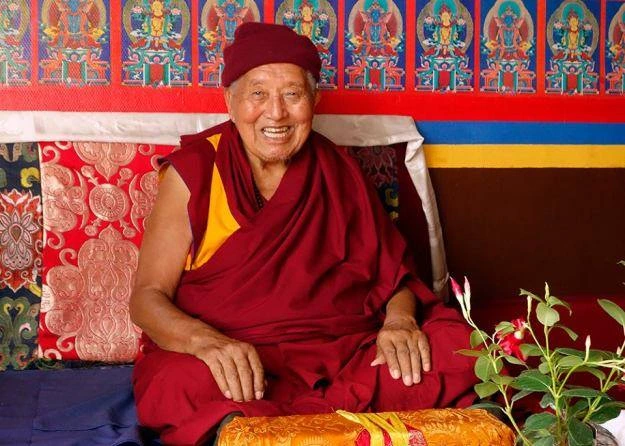
About Yongdzin Tenzin Namdak Rinpoche
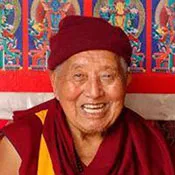
Yongdzin Tenzin Namdak Rinpoche was born in 1926 in the kingdom of Mije, in the village of Khamnyin in the Khyunkar region of Kham, Tibet. From an early age, he displayed extraordinary qualities and devotion to the Yungdrung Bön tradition. His father was Drewo Pagsam and his mother was Dongza Gachung.
At the age of eight, Rinpoche learned reading and writing from his uncle, who served as an umdze (chant master). By the age of eleven, he studied thangka painting under the guidance of his uncle Tshering Yangpel and his grandfather Lhazo U.
The great master Zödpa Gyaltsen Rinpoche recognized the young Tendzin Namdak’s future importance to the preservation of Yungdrung Bön. He offered purification rituals daily and introduced him to the biographies and lives of the great Dzogchen masters.
At fifteen, Rinpoche developed a deep sense of renunciation and wished to follow the path of the realized masters of the past. During this period, he assisted in the construction and sacred artwork of Yungdrung Ling Monastery, where he also received numerous empowerments, oral transmissions, and teachings from several respected masters. He especially studied logic and philosophy under Abbot Zangyal.
At the age of seventeen, he entered Menri Monastery and received novice monk vows from senior teachers including Tshagpe Gelong and Sönam Rinchen. Soon after, he undertook pilgrimage journeys, including to Mount Kailash in Nepal, before continuing advanced studies in philosophy, astrology, ritual sciences, and monastic disciplines at Yungdrung Ling.
From the age of nineteen, Yongdzin Rinpoche spent five years studying closely under Yongdzin Tshultrim Gyaltsen. During this time, he trained extensively in astrology, grammar, poetry, ritual melodies, orthography, mandala construction, and the liturgical traditions of Bön. He also practiced ngöndro accumulations, received direct introduction to the natural state, and completed extended dark retreat meditation.
In 1948, Rinpoche joined the dialectic school at Menri Monastery where he engaged in rigorous study of collected topics, logic, valid cognition, Prajnaparamita, Madhyamaka philosophy, cosmology, monastic discipline, Tantra, Dzogchen, and the Zhang Zhung Nyengyud transmissions. His studies established him as one of the foremost scholars and practitioners of his generation.
In 1952, at the age of twenty-seven, Yongdzin Rinpoche successfully earned the Geshe degree following extensive public examinations and debate before highly learned masters and monastic assemblies. He was then enthroned as the Menri Ponlob, the principal teacher of Menri Monastery.
Over the following years, he received the complete outer, inner, and secret transmissions of the Bön tradition from many eminent masters, becoming a holder of the teachings of Sutra, Tantra, and Dzogchen. He taught widely and tirelessly, guiding countless students and helping preserve the teachings during one of the most difficult periods in Tibetan history.
During the Tibetan upheaval of 1959, Yongdzin Rinpoche safeguarded priceless sacred objects, scriptures, relics, and important Bön texts by bringing them safely into exile in India under extremely dangerous conditions.
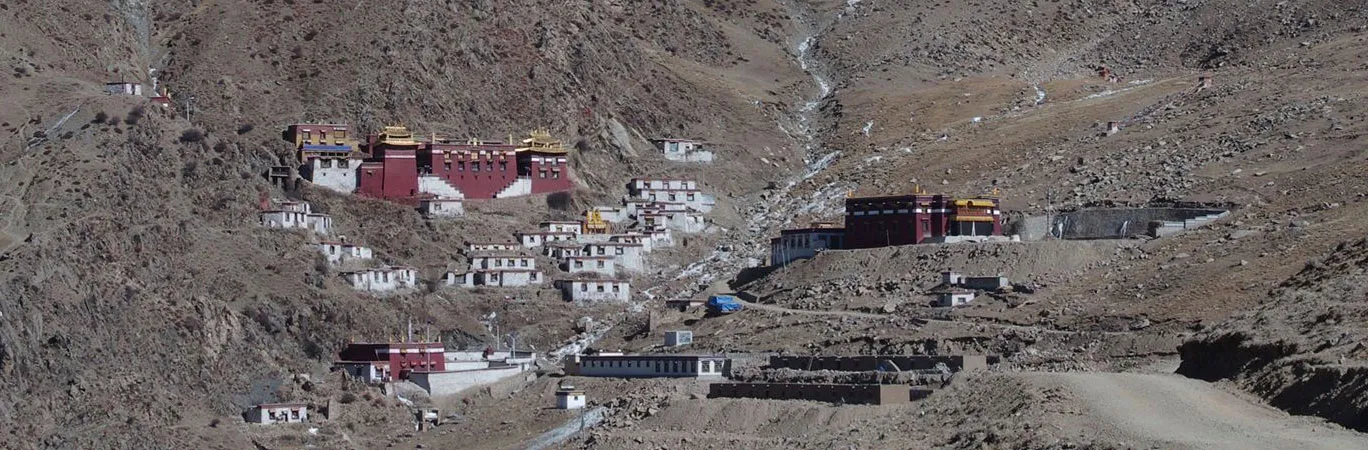
In the decades that followed, he played a central role in rebuilding and preserving the Yungdrung Bön tradition in exile. He helped establish settlements and monasteries in India and Nepal, including the re-establishment of Menri Monastery in Dolanji and the founding of Triten Norbutse Monastery in Nepal.
Together with the 33rd Menri Trizin, Lungtok Tenpai Nyima Rinpoche, Yongdzin Rinpoche re-established the Bön dialectic educational system and trained generations of monks and practitioners in Sutra, Tantra, Dzogchen, philosophy, ritual sciences, and traditional arts. Under his guidance, hundreds of students earned Geshe degrees and became teachers carrying the lineage throughout the world.
Throughout his life, Yongdzin Rinpoche has continuously bestowed empowerments, oral transmissions, and teachings to thousands of practitioners from both Eastern and Western countries. He also worked tirelessly to preserve and publish rare Bön scriptures and canonical texts, ensuring their survival for future generations.
Rinpoche authored more than twenty volumes on Bön philosophy, history, Tantra, Dzogchen, cosmology, and traditional sciences. Many of his works have been translated into English and other languages, helping introduce the Yungdrung Bön tradition to an international audience.
Despite his vast accomplishments and global recognition, Yongdzin Rinpoche is known for his humility, simplicity, and unwavering dedication to study and practice. Rather than seeking power or fame, he has devoted his life entirely to preserving the teachings and benefiting all beings.
Even into his later years, Rinpoche continued to teach daily, write commentaries, guide students, conduct rituals, and maintain the living transmission of the Bön tradition with extraordinary clarity, compassion, and dedication.